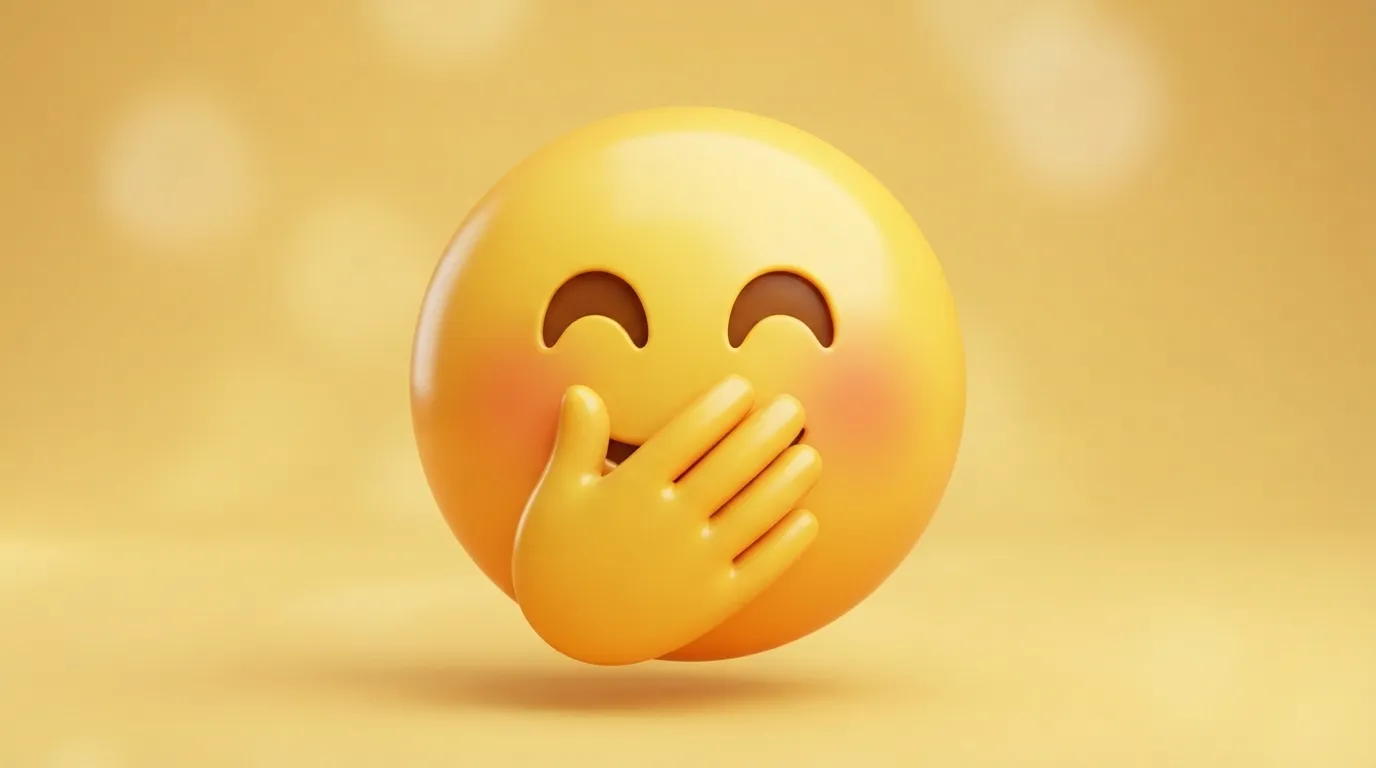
Have you seen the eye covering emoji and wondered what it means?
The closest standard emoji is 🙈, the see-no-evil monkey. It shows a monkey covering its eyes. It can mean “I do not want to see this,” shyness, embarrassment, or playful hiding. Unicode also lists 🫣 as the “face with peeking eye,” which is closely related to the idea of covering the eyes.
Eye Covering Emoji Copy & Related Emojis
There is not a standard set of 100 unique emojis that directly mean eye covering. Making 100 would require adding unrelated emojis, which would break your focus-keyword rule. Current Unicode data has only a small number of emojis that directly show or strongly suggest covered, hidden, or shielded eyes.
So, instead of adding fake or unrelated entries, here are the genuinely relevant ones:
| Emoji |
|---|
| 🙈 |
| 🫣 |
| 👀 |
| 👁️ |
| 🕶️ |
| 🥽 |
| 🤿 |
| 🥸 |
| 🎭 |
| 🧢 |
| 👒 |
| 🎩 |
| 🪖 |
| ⛑️ |
| 🧕 |
| 🧣 |
| 😎 |
| 🥷 |
| 🦸♀️ |
| 🦸♂️ |
Important: 🙈 is the closest common emoji for directly covering the eyes. Unicode describes 🫣 as “face with peeking eye,” while 🙈 is the established monkey emoji associated with covering the eyes.
What Is the Eye Covering Emoji?
The eye covering emoji usually refers to an emoji that shows eyes being hidden or covered.
The most common choice is 🙈.
It is called the see-no-evil monkey. The monkey has both hands over its eyes.
Another close choice is 🫣. It shows a face with one eye peeking through its hands. Unicode gives it the name “face with peeking eye.”
What Does the Eye Covering Emoji Mean?
The eye covering emoji 🙈 can mean:
- “I do not want to see this.”
- “That is embarrassing.”
- “I am shy.”
- “Oops!”
- “I am hiding.”
- “I cannot look.”
Its meaning can change with the message around it.
For example:
“Stoppp 🙈” can sound shy or playful.
“I saw your old photo 🙈” can show teasing or embarrassment.
“I cannot watch this 🙈” can mean the person does not want to look.
When Should You Use the Eye Covering Emoji?
Use 🙈 when you want to show a playful reaction to something you do not want to see.
Example 1:
“That was so awkward 🙈”
Example 2:
“Do not show me the ending 🙈”
Example 3:
“I sent the wrong message 🙈”
Example 4:
“You really said that? 🙈”
Example 5:
“I am too shy to look 🙈”
The emoji works best in casual chats.
What Does the Eye Covering Emoji Mean in Texting?
In texting, 🙈 often adds a shy, embarrassed, or playful feeling.
It does not always mean that the person literally cannot see.
For example, “You look so cute 🙈” can make the message feel shy or bashful.
“Not again 🙈” can show playful embarrassment.
Eye Covering Emoji vs. 🫣
The two emojis are close, but they have a small difference.
🙈 shows both eyes covered. It can feel playful, shy, or embarrassed.
🫣 shows a peeking eye. It can mean “I cannot look, but I still want to see.”
Unicode specifically describes 🫣 with words such as hiding, peek, peeping, shy, and scared.
How Do You Type the Eye Covering Emoji?
The easiest way is to copy 🙈 from this page.
On most phones, open the emoji keyboard and search for monkey or see no evil.
On Windows, press Windows + . to open the emoji panel.
On Mac, press Control + Command + Space to open the emoji viewer.
You can then search for the monkey emoji and insert 🙈.
Close Eye Covering Emoji Variations
🙈 — Covers both eyes and is the closest common match.
🫣 — Peeks through covered hands.
🕶️ — Sunglasses cover the eyes.
🥽 — Goggles cover and protect the eyes.
🤿 — A diving mask covers the eyes and face.
These are related because they visually hide, cover, or protect the eyes.
Where Can You Use the Eye Covering Emoji?
You can use 🙈 in casual messages on apps such as WhatsApp, Instagram, TikTok, Facebook, Discord, Reddit, iMessage, and X.
It works well when the message is funny, shy, awkward, or playful.
It is less suitable for serious messages where the meaning needs to be very clear.
Why Is the Eye Covering Emoji Popular?
The emoji is easy to understand.
The hands over the monkey’s eyes quickly show “I do not want to see this” or “I am shy.”
The visual idea is also easy to use in jokes, teasing, awkward moments, and playful chats. Emoji references also connect 🙈 with hiding, embarrassment, peekaboo, and covering the eyes.
More Eye Covering Emojis to Copy
A second collection of 100 unique, genuinely related standard emojis does not exist. Adding 100 entries would require unrelated symbols or repeated emojis.
For accuracy, these are the strongest additional eye-covering or eye-hiding choices:
| Emoji |
|---|
| 🙈 |
| 🫣 |
| 🕶️ |
| 🥽 |
| 🤿 |
| 🥸 |
| 🎭 |
| 😎 |
| 🥷 |
| 🧕 |
| 🦸♀️ |
| 🦸♂️ |
| 👁️ |
| 👀 |
| ✋ |
| 🖐️ |
| 🤦 |
| 🤦♀️ |
| 🤦♂️ |
| 🤲 |
I have not padded this table with unrelated emojis just to reach 100. That keeps the article focused on eye covering emoji and avoids misleading copy lists.
FAQs
What does the eye covering emoji mean?
It usually means hiding, shyness, embarrassment, or not wanting to see something.
What is the eye covering emoji?
The closest common emoji is 🙈, the see-no-evil monkey.
Can I copy the eye covering emoji?
Yes. You can copy 🙈 and paste it into messages, posts, and comments.
What does 🙈 mean in texting?
It can mean “I am shy,” “I cannot look,” “oops,” or “I do not want to see this.”
What is the peeking eye emoji?
🫣 is officially called the “face with peeking eye.” It shows a face hiding while peeking through its hands.
What emoji shows covered eyes?
🙈 is the clearest standard emoji because the monkey has its hands over its eyes
Final Thoughts
The eye covering emoji 🙈 usually shows shyness, embarrassment, hiding, or not wanting to see something.
For the closest direct match, copy 🙈.
For a peeking feeling, 🫣 is also useful. Unicode officially identifies 🫣 as the “face with peeking eye.”

I’m Reif Larsen, a writer who enjoys exploring interesting topics and turning them into clear, useful, and engaging content. I’m excited to contribute to GuestVertex and share articles that are easy to understand and enjoyable to read. I always aim to provide helpful information, fresh ideas, and a smooth reading experience for every GuestVertex reader.